

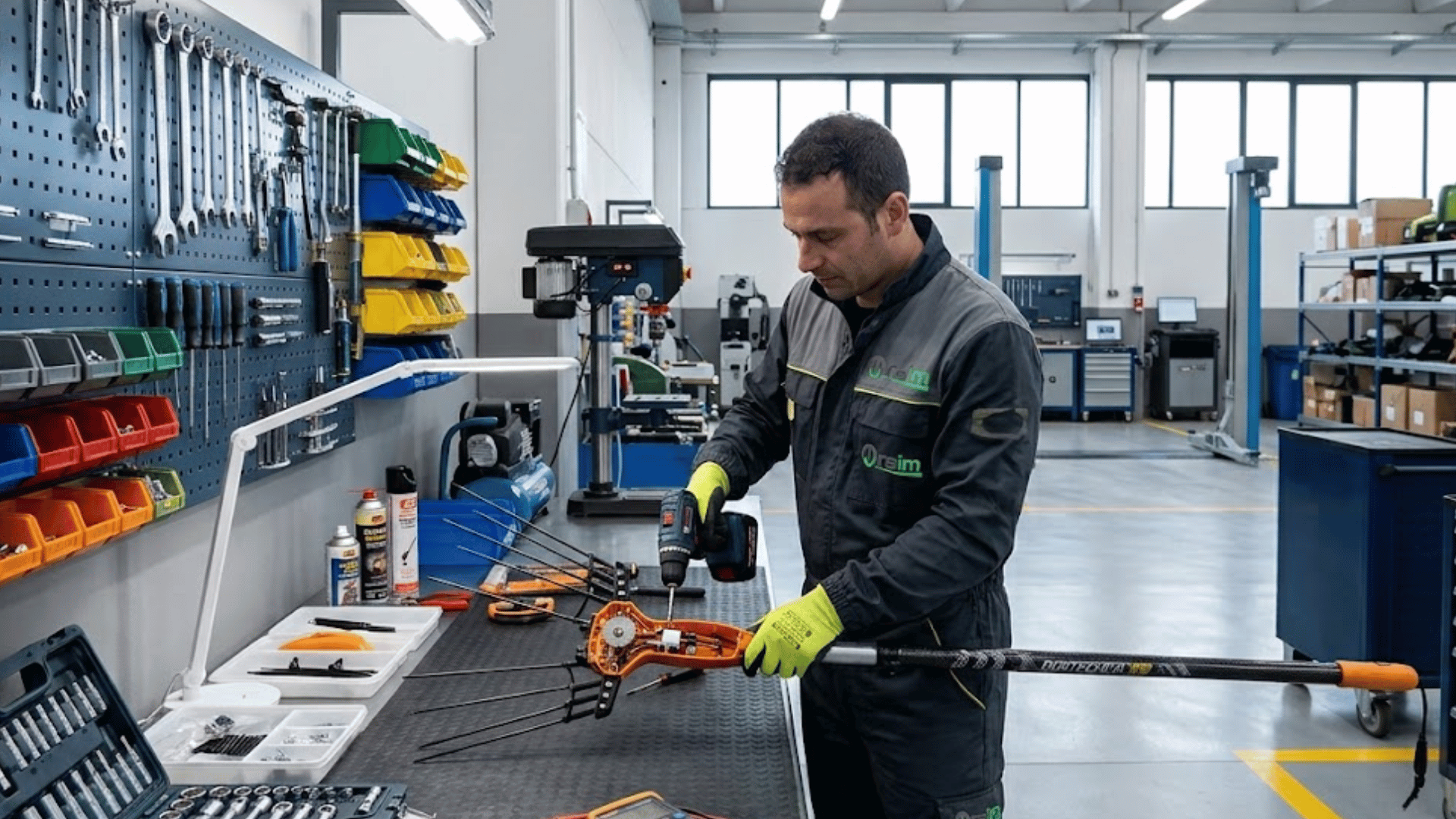
In Calabria, the olive harvesting season is one of the most intense and essential moments of the entire agricultural year. From the hills of the Crotone Marchesato down to the coastal areas, starting the olive harvest requires perfectly functioning machinery and equipment ready to handle demanding work schedules. At Raim Sas—with our store and workshop in Crotone and online at raimsas.com since 2006—we know how crucial it is to get a head start on maintenance checks to prevent frustrating downtime during peak harvest days.
The harvest season and the importance of preparation
With the arrival of autumn, the countryside of Southern Italy comes alive with laying out nets and harvesting olive trees. In our region, the window of time to harvest the fruit at the right stage of ripeness is often limited. In addition, autumn weather can change suddenly, making sunny days in the groves even more precious. In this situation, every single hour lost to a sudden breakdown of an olive harvester or tractor leads to financial loss and unnecessary stress.
Electric olive shakers, whether brushed or with modern brushless motors, undergo continuous stress during operation. Incessant vibrations, direct contact with branches, dust, and built-up sap put heavy strain on both the mechanical and electrical components of the tool. The same goes for tractor engines used for transport or to power air compressors. Preparing your tools before heading out to the field is the best way to work stress-free and protect your investment.
In short
- Preventive maintenance. Inspecting equipment before the harvest avoids sudden field breakdowns.
- Head lubrication. Using the right grease reduces gear friction and prevents overheating.
- Battery efficiency. Checking contacts and charge status ensures all-day runtime.
- Filters and engine. Checking the tractor ensures safe transport even on difficult terrain.
- Spare parts stash. Keeping extra carbon rods and fuses handy lets you solve small unexpected issues right away.
Whether you are a professional farmer, a contractor, or a hobbyist tending to the family olive grove on weekends, taking a few hours for maintenance before starting work will make a big difference in the final result.
Avoiding field breakdowns and protecting machinery health
When working in the olive grove, a damaged wire causing a bad connection or a seized gear can ruin an entire workday. Often, these issues arise during summer storage when equipment sits unused in warehouses. Humidity deposits layers of oxidation on electrical connections, while old sap residues harden and jam the mechanics inside the harvester heads.
An olive harvester that doesn't receive the correct voltage from the 12-volt battery or works against high mechanical friction tends to overheat quickly. This leads to abnormal battery drain, reduced strokes per minute of the combs, and in worse cases, broken internal gears or a burnt motor. Likewise, working with worn or broken tines reduces harvesting efficiency, forcing the operator to go over branches repeatedly, which risks damaging the tree.
Tractor maintenance also plays a decisive role. A missed oil change or a clogged fuel filter can cause power drops right when tackling steep climbs with a trailer full of crates. A proper maintenance routine eliminates these risks and extends the life of your equipment over time.
Practical steps for equipment maintenance
-
Inspect and replace carbon rods
Check each tine on the harvester comb individually. If you notice cracks, frayed carbon, or bends, replace the affected rod. A broken tine causes an imbalance in head vibrations, fatiguing the operator and damaging the tool's internal mechanisms.
-
Clean the harvester head and apply suitable grease
Remove the protective covers and clean dirt and sap residue from the gears. Apply high-performance multipurpose grease to the designated greasing points. A thin layer of lubricant reduces mechanical wear and prevents overheating during long hours of use.
-
Check cables, clamps, and electrical connectors
Brush the battery clamps and terminals to remove all traces of oxidation. Inspect the entire power cable for pinching or cuts on the protective sheath. An undamaged cable ensures the harvester motor always receives a steady electrical current.
-
Test the battery and charging system
Fully charge the 12-volt battery before heading out into the field. Measure the voltage to make sure it holds a charge under load. An inefficient battery slows down the harvester and forces you to stop work earlier than expected.
-
Replace oil and filters on the support tractor
Before starting heavy haulage, check fluid levels on the tractor. Replace the engine oil filter and check fuel filters. A well-lubricated engine protected from impurities runs at ideal temperatures and avoids sudden performance drops.

Don't wait until the morning of your first workday to start your tools. Do a dry test in your yard a week ahead: connect the harvester, run it for a couple of minutes, and check for any strange noises, abnormal vibrations, or overheating along the cable and handle.
Not sure which spare part to choose for your machine, or can't find the right part number? Take a photo of the old part or nameplate and send it to our WhatsApp support, or visit us in person at our store and workshop in Crotone. We ship quickly across Italy with GLS courier!