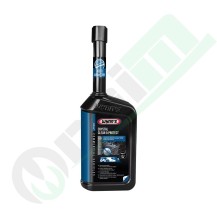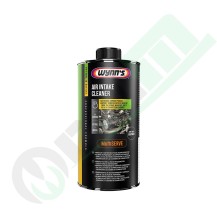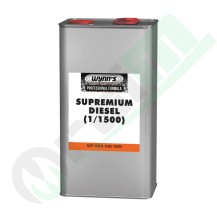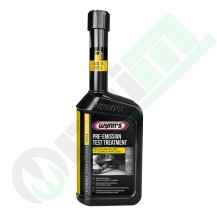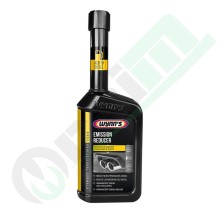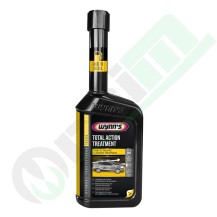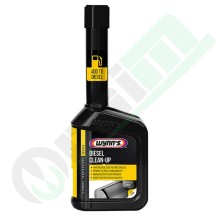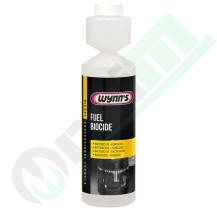

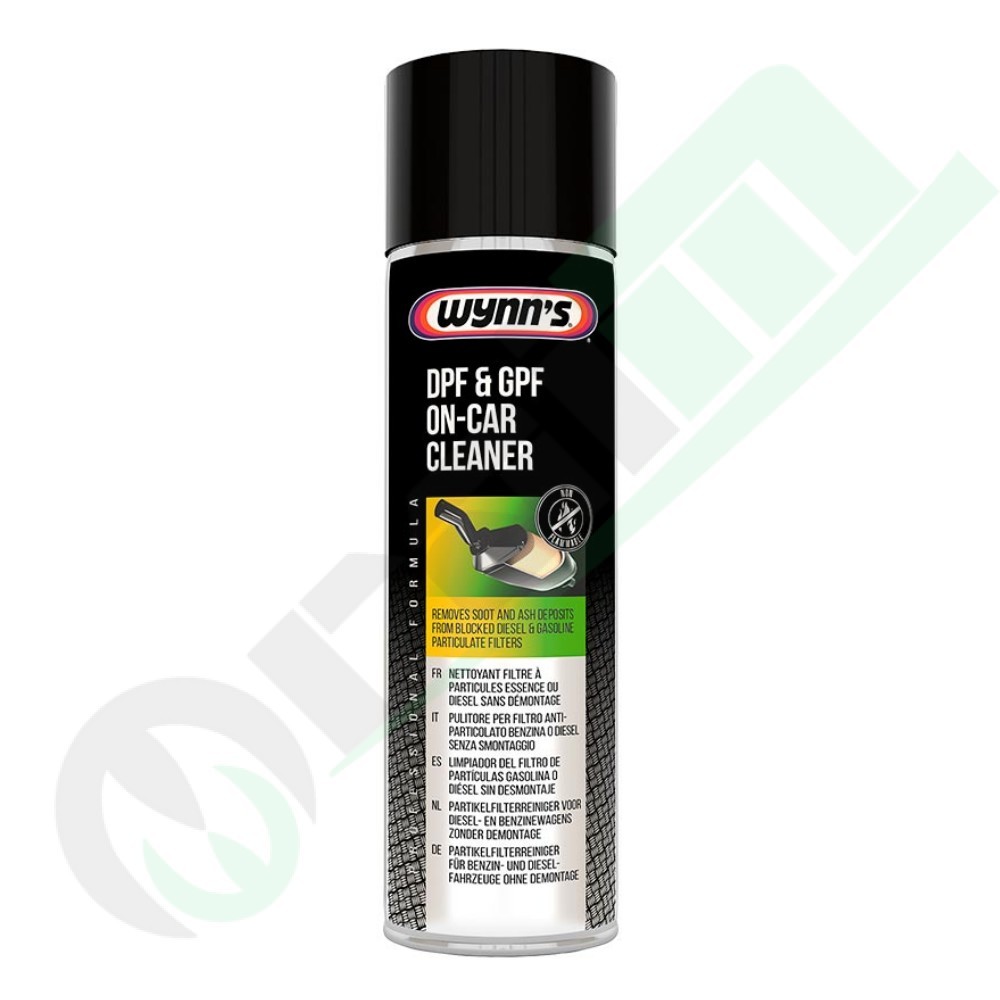
Wynn's DPF & GPF On-Car Cleaner High-Density Active Foam 500ml - Code W29079
The professional-grade Wynn's DPF & GPF On-Car Cleaner (Product Code: W29079) is an advanced non-flammable, rapid-dissipating active foam formulation engineered explicitly to clean, de-carbonize, and restore blocked diesel particulate filters (DPF/FAP) and gasoline particulate filters (GPF) safely and effectively, directly on the vehicle without hardware disassembly. This heavy-duty flushing compound disintegrates severe carbon soot accumulation and hardened ash deposits, extending its conditioning benefits upstream to clean combustion chambers, piston crowns, valve stems, and seat valve channels.
Design Details and Functionality
When natural automated soot regeneration parameters fail due to short stop-and-go commuting cycles, particulate filters experience progressive restriction, driving up exhaust line backpressure and forcing the engine management module into a limp-home safety state. This cleaner’s fluid foam technology penetrates deep into the porous ceramic honeycomb core of the DPF or GPF matrix, chemically breaking down dense soot structures into easily flushed micro-particles. The chemical formulation is entirely non-flammable and completely safe for catalyst precious metals. This direct, closed-loop cleaning process removes line restrictions, recovers lost engine horsepower, stabilizes volumetric airflow indicators, and significantly expands the operational service life of advanced vehicle emissions subsystems.
Technical Specifications
| Component Classification |
Non-flammable active chemical foam flush for on-car DPF and GPF regeneration |
| Brand Manufacturer |
Wynn's (Professional Range) |
| Commercial Product Name |
DPF & GPF On-Car Cleaner |
| Standard Package Volume |
500 ml Aerosol spray can |
| Target After-Treatment Hardware |
Diesel Particulate Filters (DPF/FAP) and Gasoline Particulate Filters (GPF) |
| Chemical Stability Safety |
Rapid-evaporating compound, non-flammable formula, safe for lambda sensors and catalysts |
| Product Reference Code |
W29079 |
Workshop Pre-Application Guidelines
- Electronic Diagnosis: Query the OBD-II interface via an electronic scan tool, check for logged fault codes, and confirm that the particulate filter hardware restrictions have triggered a system block.
- Lubrication System Assessment: Thoroughly inspect the engine oil level and condition. In cases of excessive fuel dilution or fluid breakdown, run a complete oil loop flush using Wynn's Oil System Cleaner and replace both the engine oil and oil filter element before starting the treatment.
- Baseline Fuel Volume: Verify that the vehicle's primary fuel tank is filled to at least one-quarter (1/4) of its total capacity.
- Thermal Threshold: Run the engine until it reaches its standard operating temperature controlled by the thermostat, then switch off the ignition.
- MAF Sensor Management (Euro 6 Engines): For vehicles conforming to Euro 6 diesel emissions standards, disconnect the Mass Air Flow (MAF) sensor to prevent low-pressure EGR valve activation during the conditioning sequence.
Mechanical Application Protocol
- Step 1 (Interface Connection): Access the particulate filter core by disconnecting the differential pressure sensor pipe, temperature sensor, or oxygen sensor. Insert the aerosol applicator tube directly into the opening. Critical Safety Rule: Ensure that the selected entry point is physically lower than the turbocharger assembly to prevent chemical foam from flowing backwards into the engine block.
- Step 2 (Injection): Spray the full contents of the 500 ml Wynn’s DPF & GPF On-Car Cleaner can directly into the filter unit until empty.
- Step 3 (Chemical Reaction): Allow the chemical formula to settle, react, and liquefy deposits inside the core matrix for a window of 15 to 30 minutes.
- Step 4 (Hardware Reassembly): Remove the spray probe line and carefully reinstall the pressure sensor connection lines or the temperature/oxygen sensors.
- Step 5 (Dynamic Thermal Cycle): Following the 15-30 minute pause, start the engine and let it run at normal idle speed for 5 continuous minutes. Next, rev and maintain the engine at a steady speed of 2,000 – 2,500 RPM for an additional 5 minutes.
- Step 6 (Electronic Reset): Reconnect the Mass Air Flow (MAF) sensor if previously unplugged. Use the diagnostic scan tool to clear all fault codes and execute any adapted reset procedures or particulate filter parameter initializations required by the manufacturer.
- Step 7 (Validation): Perform an extended dynamic road test to confirm the recovery of correct exhaust backpressure limits and gas velocity parameters.
Post-Flush Maintenance Protocol & Fuel Tank Synergy Solutions
- Oil Loop Maintenance: Immediately following the filter cleaning cycle, it is highly recommended to perform an internal lubrication flush by adding Wynn’s Oil System Cleaner into the crankcase, executing the engine flush procedure, and performing an immediate oil and filter element change.
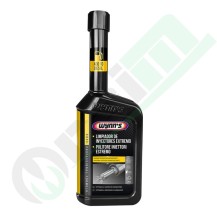
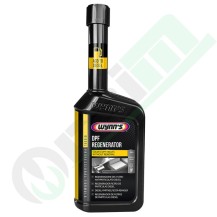
- Fuel Tank Synergy (Diesel Units): To support downstream filtration cleanliness and protect high-pressure fuel loops, add one bottle of Wynn’s Diesel Extreme Injector Cleaner and/or one bottle of Wynn's DPF Regenerator to the fuel tank (ensuring the tank is filled to at least 1/2 capacity).
- Fuel Tank Synergy (Gasoline Units): To optimize post-wash combustion parameters, add one bottle of Wynn’s GDI Efficiency Restorer and/or one bottle of Wynn's Catalytic Convertor & Oxygen Sensor Cleaner to the fuel tank (ensuring the tank is filled to at least 1/2 capacity).
Drivetrain Compatibility & Specifications
| Engine Class |
Exhaust After-Treatment Compatibility |
| Gasoline Range |
Fully compatible with Gasoline & Hybrid Gasoline internal combustion engines fitted with GPF filters. |
| Diesel Range |
Fully compatible with Diesel & Hybrid Diesel setups (fuels up to B30) fitted with DPF/FAP filters. |