

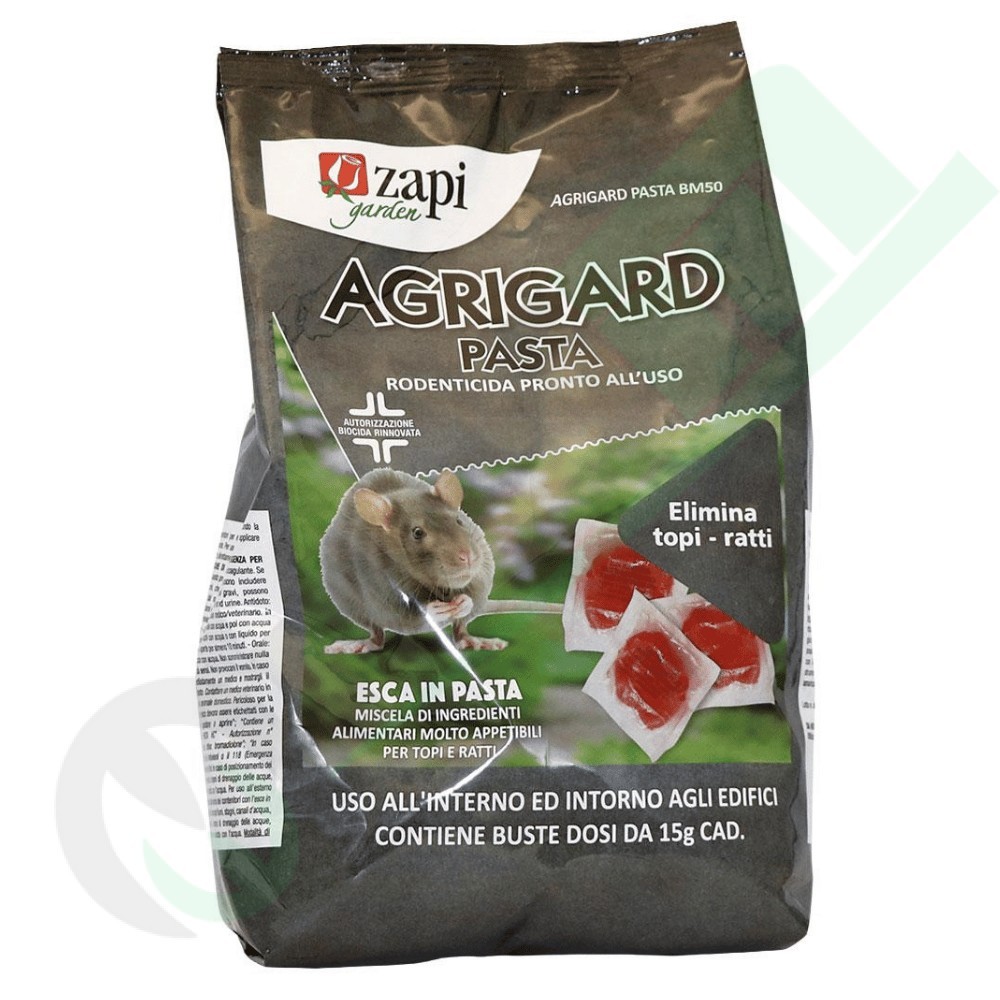
Agrigard Red Pasta Rodenticide Bait 1.53kg Code 620025 Zapi
Ready-to-use fresh red pasta rodenticide bait Agrigard Pasta BM 50 in a 1.53 kg value pack (approx. 100 single-dose 15 g filter-paper sachets), part number 620025 by Zapi Garden. Formulated for high palatability and outstanding cost-effectiveness against house mice and brown rats. Engineered for domestic and rural rodent control inside and around buildings, garages, cellars, and storehouses when used inside tamper-proof bait stations. Authorized biocidal product.
Read more ↓- Excellent Quality-to-Price Ratio
- 15g Filter-Paper Sachets
- Reliable Control of Mice and Rats
Sconto extra riservato ai clienti registrati
Accedi per sbloccare il codicePrezzo finale con coupon: €12.25
Description
Ready-to-use fresh red pasta rodenticide bait Agrigard Pasta BM 50 in a 1.53 kg value pack (approx. 100 single-dose 15 g filter-paper sachets), part number 620025 by Zapi Garden. Formulated for high palatability and outstanding cost-effectiveness against house mice and brown rats. Engineered for domestic and rural rodent control inside and around buildings, garages, cellars, and storehouses when used inside tamper-proof bait stations. Authorized biocidal product.
Key features
Application areas and machine suitability
| Sector / Application Area | Operational Capabilities & Benefits |
|---|---|
| Homes and Domestic Outbuildings | Targeted eradication of house mice across basements, garages, utility rooms, attics, and boiler rooms. |
| Exterior Foundation Perimeters | Placement inside tamper-resistant bait stations along perimeter walls, walkways, and loading areas to halt encroaching brown rats. |
| Warehouses and Agricultural Facilities | Cost-effective continuous rodent management across barns, machine sheds, and goods storage spaces. |
Specifications
| Commercial Product Name | AGRIGARD PASTA |
|---|---|
| Commercial Product Code | 620025 |
| Official Registration Name | Agrigard Pasta BM 50 |
| Formulation Category | Ready-to-use fresh red rodenticide paste |
| Packaging and Format | 1.53 kg total (approx. 100 filter-paper sachets of 15 g each) |
| Target Biological Species | House mouse (Mus musculus) and brown rat (Rattus norvegicus) |
| House Mouse Dosing | Up to 50 g per bait point every 5 meters (reduce to 2 meters in severe infestations) |
| Brown Rat Dosing | Up to 100 g per bait point every 10 meters (reduce to 5 meters in severe infestations) |
| Recommended Dispensers | Tamper-resistant bait stations such as Zapi Bait Station or T-Dispenser |
| Regulatory Authorization | Biocidal Product PT 14 - Italian Ministry of Health Auth. No. IT/2014/00220/MRA |
| Sales Classification / SDS | Over-the-counter general sale / Safety Data Sheet (SDS) available |
Compatible parts and accessories 7
Parts and accessories that go with this product
From the same category: Rodenticides
Other items from the same family
Same category: not always compatible, check the model in the description.
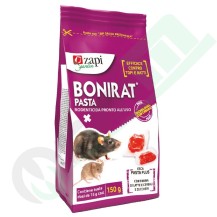
Gardentop Next Pasta Plus Rodenticide Bait 150g Code 620017 Zapi
Ref. 620017Bonirat Pasta Plus Rodenticide Bait 1.53kg Code 620020 Zapi
Ref. 620020Agrigard Blue Paste Rodenticide Bait 150g Code 620026 Zapi
Ref. 620026
Kill Trap Fluo Snap Trap for Mice 2 Pack Code 620036 Zapi
Ref. 620036Bonirat Pasta Plus Rodenticide Bait 150g Code 620019 Zapi
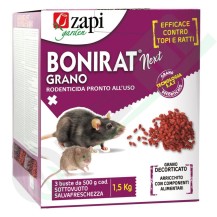
Ref. 620019Bonirat Next Hulled Grain Rodenticide Bait 1.5kg Code 620029 Zapi
Ref. 620029
Zapicol Glue Tube for Mouse and Rat Traps 135g Code 620030 Zapi
Ref. 620030
Zapi Mini Eco-Tablet Ready to Use Adhesive Sticky Trap 620031
Ref. 620031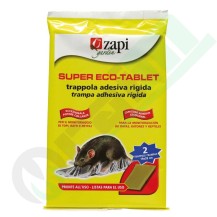
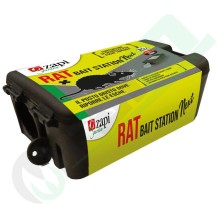
Rat Bait Station Next Tamper Resistant Rodent Box 620038 Zapi
Ref. 620038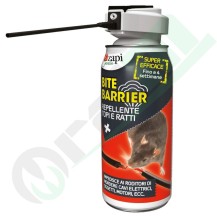
Bite Barrier Anti Chew Rodent Repellent Spray Code 620040 Zapi
Ref. 620040Reviews
Shipping and returns
 Agrigard Red Pasta Rodenticide Bait 1.53kg Code 620025 Zapi