

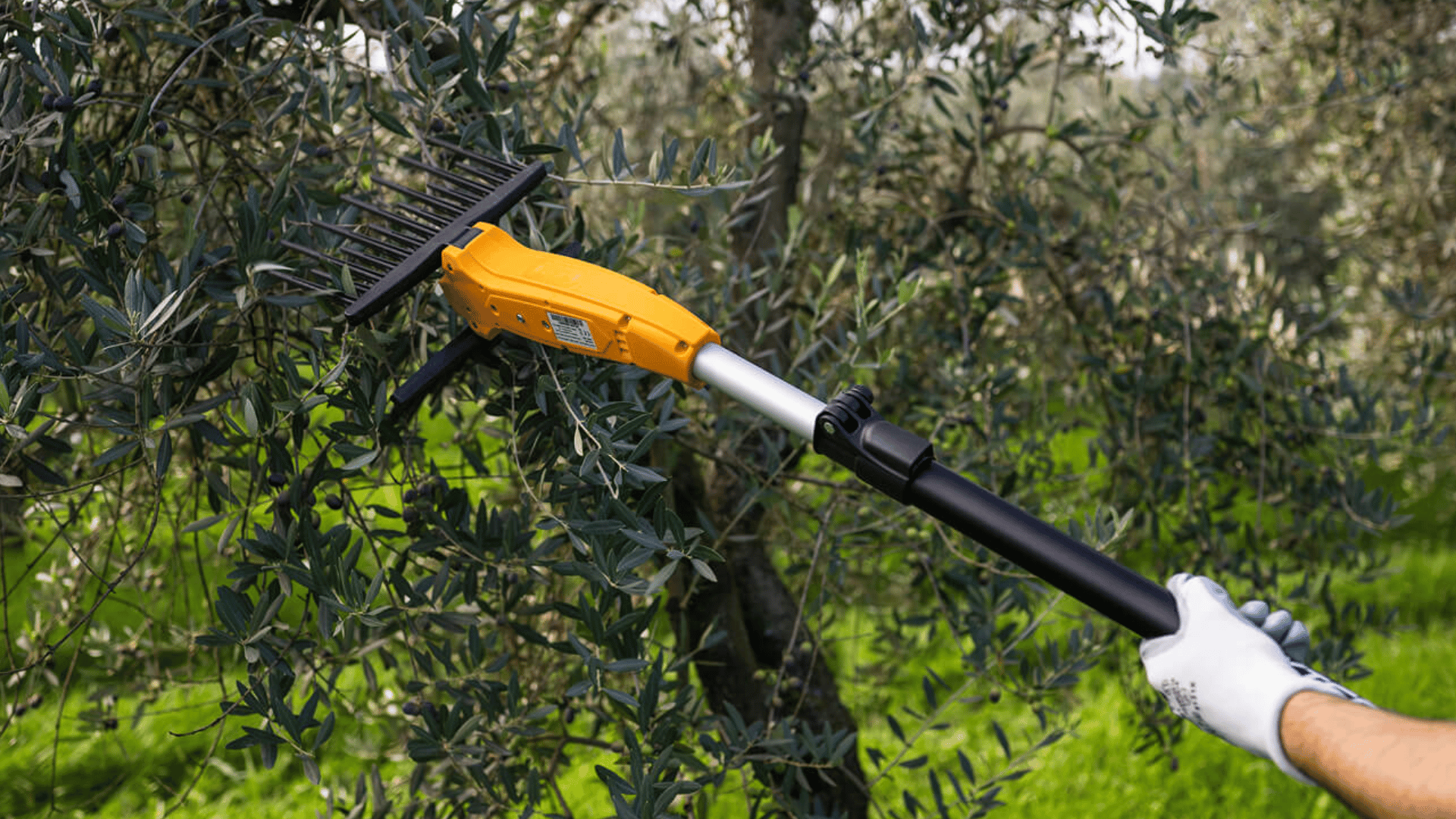
The olive harvesting season requires targeted choices to overcome labor shortages and reduce operating costs. Let's see what you need to know to choose the right harvester.
The challenge of olive harvesting and the role of machinery
In recent years, managing olive harvesting has faced severe labor shortages and high operating costs. Harvesting entirely by hand or with simple manual tools requires a significant economic commitment, weighing heavily on the final value of the crop. To defend farm profitability, using portable shakers and harvesters is no longer just an optional choice, but a practical necessity.
Moving from manual harvesting, which yields just a few kilos per hour per operator, to using a mechanical aid completely changes field rhythms. Modern harvesters increase hourly productivity and sharply lower costs per hectare compared to manual work. The market offers three main categories of machines based on power source: lightweight and quiet electric battery models; pneumatic compressed air models linked to a compressor for intensive work; and internal combustion models, which are powerful but heavier and noisier.
In short
- Costs and labor. Manual harvesting heavily impacts the business budget.
- Hourly yield. Machines increase the amount of olives harvested per hour.
- Power choice. Electric, pneumatic, or internal combustion models are available.
- Key components. Carbon rods and flexible prongs protect the tree.
The success of the harvest also depends heavily on the construction details of the tool. Telescopic carbon fiber rods help reduce weight and arm fatigue, while technopolymer or carbon prongs allow work without damaging the branches that will bear fruit the following year.
More efficiency and less fatigue among the olive trees
For those who spend entire days in the fields, working with the right tool means less fatigue and finishing the job before bad weather or excessive ripening ruins the crop. Choosing the machine suited to your land size and pruning style avoids wasted time and protects plant health. Technology today helps you work better, reducing physical effort and optimizing the olive season's timeline.
Practical tips for your equipment
-
Evaluate land surface
If you manage few trees or work part-time, focus on lightweight electric models that are easy to handle.
-
Check tree foliage
If trees are dense or not recently pruned, use rods with narrow combs and flexible prongs to avoid getting stuck in the branches.
-
Check rods and prongs condition
Before starting the season, check for cracks on carbon rods and ensure prongs are intact.
-
Plan battery maintenance
If you use an electric model, recharge batteries carefully and keep them clean to avoid losing power in the field.
Before purchasing a new harvester or spare part, always check the technical specifications and evaluate compatibility with your working system.
Do you have doubts about the right spare part or machine to choose? Come visit us at our shop and workshop in Crotone, or send us a photo of the part or label on WhatsApp: we will provide direct technical assistance.